
Getting Married in Spain
Legal at home, or legal here?
Most couples from abroad can’t have a civil wedding in Spain: one of you must be Spanish or have lived here for about two years. So most marry legally at home and have their ceremony here. A Catholic church wedding or a civil wedding in nearby Gibraltar are the other options. Here’s how each one works.
 By Wes, Owner, Wedding Planner & Coordinator · Updated
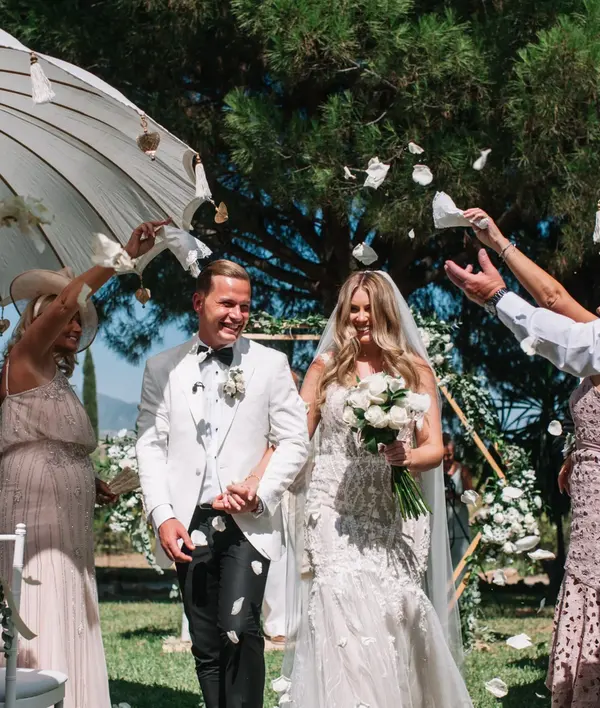
Can foreigners get married in Spain? The short answer
- Two people who don’t live in Spain usually can’t have a civil wedding here. Spanish law processes the marriage file where one of you lives, so one of you must be Spanish or have lived in Spain for about two years.
- A Catholic church wedding in Spain is legally valid with no residency rule, if at least one of you is Catholic and neither is divorced from a church marriage.
- Gibraltar, about an hour from Marbella, will marry non-residents by special licence on one working day’s notice.
- Most couples from abroad marry legally at home and have a symbolic ceremony in Spain. Guests see a full wedding; there’s no Spanish paperwork at all.
Can we get legally married in Spain?
There are four ways to do it. Which one suits you depends on where you live, your faith, and whether the legal part needs to happen on the trip.
Most couples
Legal at home, ceremony in Spain
Legally married: Yes, at homeSign the legal papers at your local registry office before or after the trip, then have the wedding you want in Spain: any venue, any time, any language, led by anyone you choose.
- No Spanish paperwork
- Ceremony anywhere: a beach, a finca, a terrace
- Led by a celebrant, a friend or family
At least one Catholic partner
Catholic church wedding
Legally married: Yes, in SpainA Catholic wedding in a Spanish church is legally valid with no residency rule. The paperwork starts at your home parish and goes through the bishop where you marry.
- At least one of you is Catholic
- Neither of you divorced from a church marriage
- Allow six months or more
Couples who want it legal on the trip
Civil wedding in Gibraltar
Legally married: Yes, in GibraltarAbout an hour from Marbella. Gibraltar has no residency rule for marriage, so you can marry legally at the registry or an approved venue, then celebrate on the Costa del Sol.
- One working day’s notice
- Stay one night in Gibraltar
- Weekday or weekend ceremonies
Spanish nationals and residents
Civil wedding in Spain
Legally married: Yes, in SpainA civil wedding at a Spanish registry or notary needs one of you to be Spanish or to have lived in Spain for about two years. For most couples from abroad, it isn’t available.
- Two years’ residency (empadronamiento)
- Marriage file at the Registro Civil or a notary
- Apostilles and sworn translations
The four options side by side
| Legal at home, ceremony in Spain | Catholic church wedding | Civil wedding in Gibraltar | Civil wedding in Spain | |
|---|---|---|---|---|
| Legally married | At home, before or after | Yes | Yes | Yes |
| Residency in Spain needed | No | No | No | About two years |
| Where the ceremony can be | Anywhere you like | An approved church | Registry or approved venue in Gibraltar | Registry, town hall or notary |
| Same-sex couples | Yes | No | Yes | Yes |
| Paperwork | Light | Heavy | Moderate | Heavy |
| Time to arrange | Weeks | Six months or more | A few weeks | One to several months |
How does a symbolic ceremony in Spain work?
It’s what most of our couples do. The legal part is a short appointment at home; the ceremony in Spain is the wedding everyone remembers.
Book the legal part at home
A short registry-office wedding with two witnesses. In England and Wales you give notice at least 28 days before.
Plan the ceremony in Spain
Choose the venue, the celebrant and the words. Nobody needs to know which day was the legal one.
Write it together
Your celebrant writes the ceremony with you: your story, readings, vows, rings, music and any rituals you like.
Celebrate
Guests see a full wedding: the walk down the aisle, vows, rings, the kiss and the party.
What do we need for a Catholic wedding in Spain?
A Catholic wedding in a Spanish church is legally binding, and the parish registers it with the Civil Registry afterwards, so there’s nothing to do at home. At least one of you must be Catholic, and neither of you can be divorced from a previous church marriage.
Start with your own parish priest. They complete the paperwork with you and send it through your diocese to the bishop where you’ll marry. Requirements vary from parish to parish, and many Spanish churches won’t take a booking more than a year ahead.
Documents usually needed
- Baptism certificates for both of you, issued within the last six months (and confirmation and communion certificates if asked)
- A pre-nuptial enquiry, completed with your parish priest at home
- A letter of freedom to marry from your parish, confirming you’ve done the pre-marriage course
- Permission from your home diocese, sent to the bishop where you’ll marry, who then authorises the Spanish church
- Passports, and civil birth certificates if the parish asks for them, translated into Spanish
Can we have another religious wedding in Spain?
Spain recognises weddings performed by the Protestant, Jewish and Muslim communities, among others. But unlike a Catholic wedding, they need the civil marriage file first: the Civil Registry checks you’re free to marry and issues a certificate of capacity, and the religious ceremony must take place within six months of it. That means the residency rule applies, so two people who live abroad can’t have a legally binding non-Catholic religious wedding in Spain.
The officiant must be authorised to perform marriages, and afterwards sends their certificate to the Civil Registry, which records the marriage.
If neither of you lives in Spain
Marry legally at home, then have a religious blessing or a celebrant-led ceremony in Spain. Many ministers, rabbis and imams will travel, and we can help you find one.
Same-sex couples
Same-sex marriage has been legal in Spain since 2005, with the same rights and the same residency rule as everyone else. Gibraltar also marries same-sex couples, and a symbolic ceremony is open to all.
Can we get married in Gibraltar instead?
Yes, and it’s the quickest legal route for couples from abroad. Gibraltar is about an hour’s drive from Marbella and has no residency rule for marriage. Non-residents marry by special licence, with one working day’s notice, as long as they stay at least one night in Gibraltar before or after the ceremony.
Ceremonies take place at the registry or at approved venues, including at weekends. Many couples marry quietly in Gibraltar on a weekday, then have the big ceremony and party on the Costa del Sol. Check the Government of Gibraltar guidance notes for the current forms. In 2026 the official fees come to about £373 for a weekday wedding at the registry, or about £496 at an approved venue at the weekend.
What Gibraltar asks for
- Full birth certificates showing your parents’ names, and passports
- If previously married: the divorce decree or death certificate
- Proof that you’re staying in Gibraltar for at least one night before or after the ceremony
- Two witnesses on the day
- Documents not in English translated, with the translator’s stamp and details
What do residents need for a civil wedding in Spain?
If one of you is Spanish, or has lived in Spain for about two years, you can marry at the Registro Civil, a town hall or a notary. First you open a marriage file (expediente matrimonial) where one of you is registered. Once it’s approved, you book the ceremony; depending on the region this takes from one month to several.
Every document from outside Spain needs a Hague apostille and a sworn Spanish translation. Requirements vary between regions, so ask the registry where you’ll apply. British nationals can read the GOV.UK guidance on getting married in Spain.
Documents usually needed
- Passports for both of you
- Proof of residence: the empadronamiento certificate or residency card showing about two years in Spain
- Full birth certificates with a Hague apostille and a sworn Spanish translation
- A certificate of no impediment (CNI) or marital status certificate (MSC) for British nationals; which one depends on the region
- If divorced or widowed: the divorce decree or death certificate, apostilled and translated
- Two witnesses on the day
The civil wedding step by step
Book an appointment
At the Registro Civil or town hall where one of you is registered (empadronado), or with a notary. Some registries take appointments online.
Open the marriage file
The expediente matrimonial. You both sign an application with your details, your witnesses, any previous marriages, a declaration that nothing stops you marrying, and where you’ve lived for the past two years.
Public notice
The registry publishes your intention to marry, usually for at least 15 days, so anyone with an objection can come forward. You may also be interviewed.
Approval
The registrar, court clerk or notary issues a ruling that you’re free to marry. That authorisation is generally valid for six months, so marry within that time.
The ceremony
Before a mayor or councillor, a court official or a notary, with two witnesses who sign with you. A town hall ceremony is usually in Spanish.
Registration
The marriage is entered in the Civil Registry and you receive your marriage certificate (and, for Spanish families, the libro de familia).
Where both of you are foreign nationals living in Spain, you can marry under Spanish law or the personal law of either of you. If you live abroad but one of you is Spanish, the file can be processed through a Spanish consulate.
What paperwork do British nationals need?
This applies when one of you lives in Spain and you’re marrying at a Spanish registry. For a Catholic wedding the parish will tell you what it needs; for a symbolic ceremony you need nothing.
Which document?
Spanish registries ask British nationals for a certificate of no impediment (CNI), a marital status certificate (MSC), or both. It depends on the registry: the Central Civil Registry in Barcelona, for example, wants an MSC. Ask your registry first.
Living in the UK
Give notice at your UK register office to get a UK CNI, then apply online to exchange it for a local CNI, because Spanish authorities only accept a CNI issued in Spain.
Living in Spain
Apply through the British embassy in Spain. If you need both an MSC and a CNI, one application covers both and you don’t need a UK CNI first.
Online only
Since 3 February 2025 the British embassy only accepts online applications for these certificates. The affirmation forms must each be signed in front of a notary in Spain.
Full details, forms and fees are on GOV.UK’s getting married in Spain guidance.
How much does it cost to get married legally in Spain?
The legal fees are small next to the wedding itself. Fees change, so check each one with the office concerned.
| What | Covers | Typical cost |
|---|---|---|
| Legal wedding at a UK register office | Notice and ceremony fees | Set by your local council |
| Apostille (UK) | Per document | Check the FCDO legalisation fee |
| Sworn translation into Spanish | Per document | Quoted by the translator |
| Copy of a UK birth or marriage certificate | From the General Register Office | £12.50, or £38.50 priority |
| Certificate of no impediment | Per certificate | Check the current fee on GOV.UK |
| Catholic church wedding | Church donation, plus priest and admin fees | Often about €400 each |
| Civil wedding in Gibraltar (2026 fees) | Special licence £124, notice £62.50, ceremony £186.50 on a weekday or £309.50 at a venue after hours or at weekends, certificate copy £37 | About £373 on a weekday at the registry; about £496 at a venue at the weekend |
| Symbolic ceremony in Spain | Celebrant’s fee | Paid to your celebrant; no official fees |
The rest of the budget is the wedding: see our wedding packages and wedding suppliers pages for prices on the Costa del Sol.
What are the Spanish wedding traditions?
You can borrow any of these for your ceremony, legal or not. Expect a late night too: dinner in Spain often starts around 10pm, and the party runs until the early hours.
Las arras
Thirteen coins the groom gives the bride, a promise to share everything. Lovely in a symbolic ceremony too.
Padrinos
Instead of bridesmaids and best men, a padrino and madrina (often the bride’s father and the groom’s mother) walk you in and witness the marriage.
Orange blossom
Azahar, worn in the hair or bouquet, a traditional symbol of happiness.
The mantilla
A lace veil worn over a tall comb, especially at church weddings in Andalucía.
Cutting the tie
Late in the party, friends cut the groom’s tie into pieces and sell them to guests to raise money for the couple.
Gifts for guests
Small favours handed out by the couple themselves as they go round the tables.
When should we sort the legal side?
Decide your route first, as it changes everything else. A guide for a wedding about a year away:
- 12 months
Choose your route
Decide where you’ll be legally married before you book anything else.
- 9 months
Catholic couples start
Speak to your parish priest about the course, the paperwork and the bishop’s permission.
- 6 months
Order documents
Birth certificates, apostilles and translations for a civil or Gibraltar wedding.
- 2 months
Paperwork arrives
Church documents should reach the Spanish parish about two months before.
- 1 month
Book the legal part
Give notice at home, or confirm the Gibraltar registry date and your hotel night.
- The week
Final run-through
The celebrant’s rehearsal, rings, witnesses and the order of the day.
Questions about getting married in Spain
Can foreigners get legally married in Spain?
Yes, but not easily. A civil wedding needs one of you to be Spanish or to have lived in Spain for about two years. Without that, the routes are a Catholic church wedding or a legal wedding at home or in Gibraltar, with the celebration in Spain.
Can two non-residents have a civil wedding in Spain?
Not usually. Spanish registries normally require one partner to be a Spanish national or a resident of about two years, proved with the empadronamiento. Some regions apply the rule differently, so always check with the Registro Civil.
Is a Catholic wedding in Spain legally recognised?
Yes. A Catholic wedding in Spain is legally valid and the church registers it with the Civil Registry, with no residency rule. At least one of you must be Catholic, and neither can be divorced from a previous church marriage.
How long does the Catholic paperwork take?
Allow six months or more. The bishop’s permission alone can take about four weeks, and the documents should reach the church in Spain about two months before the wedding. Baptism certificates must be issued within six months of the date.
Can we get married legally in Gibraltar?
Yes. Gibraltar has no residency rule for marriage: non-residents marry by special licence with one working day’s notice, as long as they stay at least one night in Gibraltar. It’s about an hour from Marbella. The official fees for 2026 come to about £373 for a weekday wedding at the registry.
Is a symbolic ceremony a real wedding?
It isn’t the legal part, but for most couples and their guests it is the wedding: the vows, the rings and the moment you’re declared married. The legal signing at home is often a short appointment with two witnesses.
Do we need to marry at home before or after the ceremony in Spain?
Either works. Many couples sign at home a few days or weeks before, so they’re married when they arrive; others do it after they get back.
Can same-sex couples marry in Spain?
Yes. Same-sex marriage has been legal in Spain since 2005, and in Gibraltar too. The residency rule for civil weddings is the same for everyone; symbolic ceremonies have no rules at all.
What is an apostille?
An international stamp that certifies a public document, such as a birth certificate, so another country accepts it. In the UK it comes from the Foreign, Commonwealth and Development Office. Spanish registries also need a sworn Spanish translation.
What is a CNI or marital status certificate?
Documents that prove a British national is free to marry. Which one a Spanish registry wants depends on where you marry, so ask the registry first, then apply through GOV.UK.
Do we need documents for a symbolic ceremony?
No. A symbolic ceremony has no legal requirements, so there’s nothing to apostille or translate. You only need the paperwork for the legal wedding at home.
Do we need witnesses?
Yes, two witnesses for a civil wedding in Spain or Gibraltar, and usually two for a church wedding. They need to bring valid ID.
Can we have a religious ceremony other than Catholic?
Protestant, Jewish and Muslim weddings can be legally recognised in Spain, but the couple still has to complete the civil marriage file first, so the residency rule applies. Couples from abroad usually marry at home and have a blessing in Spain.
How long is the marriage authorisation valid?
A Spanish ruling that you’re free to marry, or certificate of marital capacity, is generally valid for six months from its date, so plan the ceremony within that window.
Is a Spanish marriage recognised in the UK?
A legal marriage in Spain is generally recognised in the UK, and you don’t need to register it there. Keep your Spanish marriage certificate safe, with an apostille if you may need it abroad.
Can you help with the legal side?
Yes. We’ll explain the routes on your first call, point you to the right registry, parish or Gibraltar office, and line up a celebrant for the ceremony in Spain. We aren’t lawyers, so for complicated cases we’ll suggest one.
This page is general information, checked in November 2026, not legal advice. Rules change and vary between regions and parishes, so confirm with the Registro Civil, your parish or your embassy before you book.
Official sources
The rules on this page come from these official pages. They’re the place to check the latest forms and fees.
How we can help with your wedding
Wedding planners
Full planning, from the first call to the last dance.
€75 an hour + IVA
On-day coordinators
You plan it; we take over two weeks before and run the day.
From €750 + IVA
Venue sourcing
Date checks, shortlists and venue tours when you fly out.
From €75 + IVA
Vendor sourcing
Photographers, caterers, florists and music, found and booked.
On request
Wedding packages
Food, drink, styling and coordination at one price per guest.
From €175 a guest + IVA
Not sure which route is yours?
Tell us where you live and what you have in mind. We’ll explain the options on a free call and plan the ceremony with you.
Inquire!